
Laguna Ocean Foundation Emerging Leaders Program
Inspiring the Next Generation of Environmental Stewards
The Emerging Leaders Program is a Laguna Ocean Foundation (LOF) initiative designed to inspire and mentor aspiring scientists, educators, and conservation professionals—including conservation practitioners, artists, photographers, videographers, bloggers, and other creative communicators. Drawing on LOF’s network of experienced conservation professionals and partners, the program provides both funding and mentorship to support early youth through early-career leaders with an interest in protecting our planet.
Our planet is facing unprecedented environmental challenges. Climate change, pollution, as well as loss of ecosystems and biodiversity pose severe threats to people and the planet. The younger generations will be at the forefront of addressing these issues, so Laguna Ocean Foundation seeks to support emerging leaders who are ready to take on these conservation challenges for a better future! By fostering awareness, providing opportunities, and promoting solution-driven mentorship, the Emerging Leaders Program empowers youth to become active contributors to real-world environmental solutions. Whether through school initiatives, conservation clubs, hands-on restoration projects, or nature-based activities, participants gain a sense of responsibility and a lifelong commitment to environmental stewardship.
Our Purpose and Vision
At its core, the Emerging Leaders Program aims to stimulate transformative environmental action—in education, policy, community engagement, and local-level conservation—with a special focus on marine and coastal environments.
We believe in providing young leaders with an opportunity and platform to:
- Explore ideas for environmental action
- Develop and share local, practical solutions for sustainability
- Expand their conservation knowledge and expertise
- Engage directly with professionals across sectors
- Build confidence as emerging community leaders
Ultimately, LOF strives to amplify youth-led conservation and science efforts by supporting innovative ideas, scaling successful projects, and collaborating with community networks and partner organizations throughout Orange County and beyond.
How We Support Emerging Leaders
To cultivate the next generation of environmental changemakers, LOF identifies and engages exceptional young people and invests in their growth through:
- Financial support for conservation or science-based projects
- Skill-building training led by experts in the field
- One-on-one mentorship with scientists, educators, artists, and communication specialists
- Opportunities to collaborate with businesses, nonprofits, and community leaders
Young people bring unique strengths to environmental leadership, including creativity, adaptability, and technological fluency. These qualities are at the heart of our approach.
Learn about our current and past projects
A Long-Term Investment in Our Future Projects
Past Projects
El Modena High School (Orange, Ca) Ecological Research Club – Nature Center Library Project
Our community is facing growing environmental challenges, including habitat loss, declining biodiversity, and increasing water scarcity. Urban landscaping often relies on non-native plants that provide limited resources for local insects, birds, and wildlife, making it difficult for pollinators and other native species to thrive. At the same time, our changing climate makes water conservation more important than ever. These challenges not only impact local ecosystems but also limit opportunities for students to engage in hands-on environmental learning and stewardship.
In response, students are transforming a portion of their school campus into a native plant garden supported by a rain capture system. They research local plant species, selecting those that attract pollinators and wildlife while enhancing both biodiversity and sustainability. The garden will replace ornamental, non-native vegetation with a thriving, ecologically functional habitat.
To conserve water, students are installing a rain barrel and rain chains on the nature center’s interpretive classroom. Collected rainwater will irrigate the native garden, demonstrating practical sustainable water management and reducing runoff. This hands-on approach allows students to explore the water cycle, understand conservation practices, and see immediate ecological benefits from their efforts.
The project also provides a living laboratory for future classes. Students gain skills in research, data collection, and ecological problem-solving, while observing plant growth, habitat creation, and sustainable design principles in action.
Ultimately, the Native Plant Garden and Rainwater Capture Project addresses both habitat loss and water waste while empowering students to become active environmental stewards. By transforming their campus into a sustainable habitat for native species, students create a lasting impact that inspires their school and the wider community to care for the natural world.
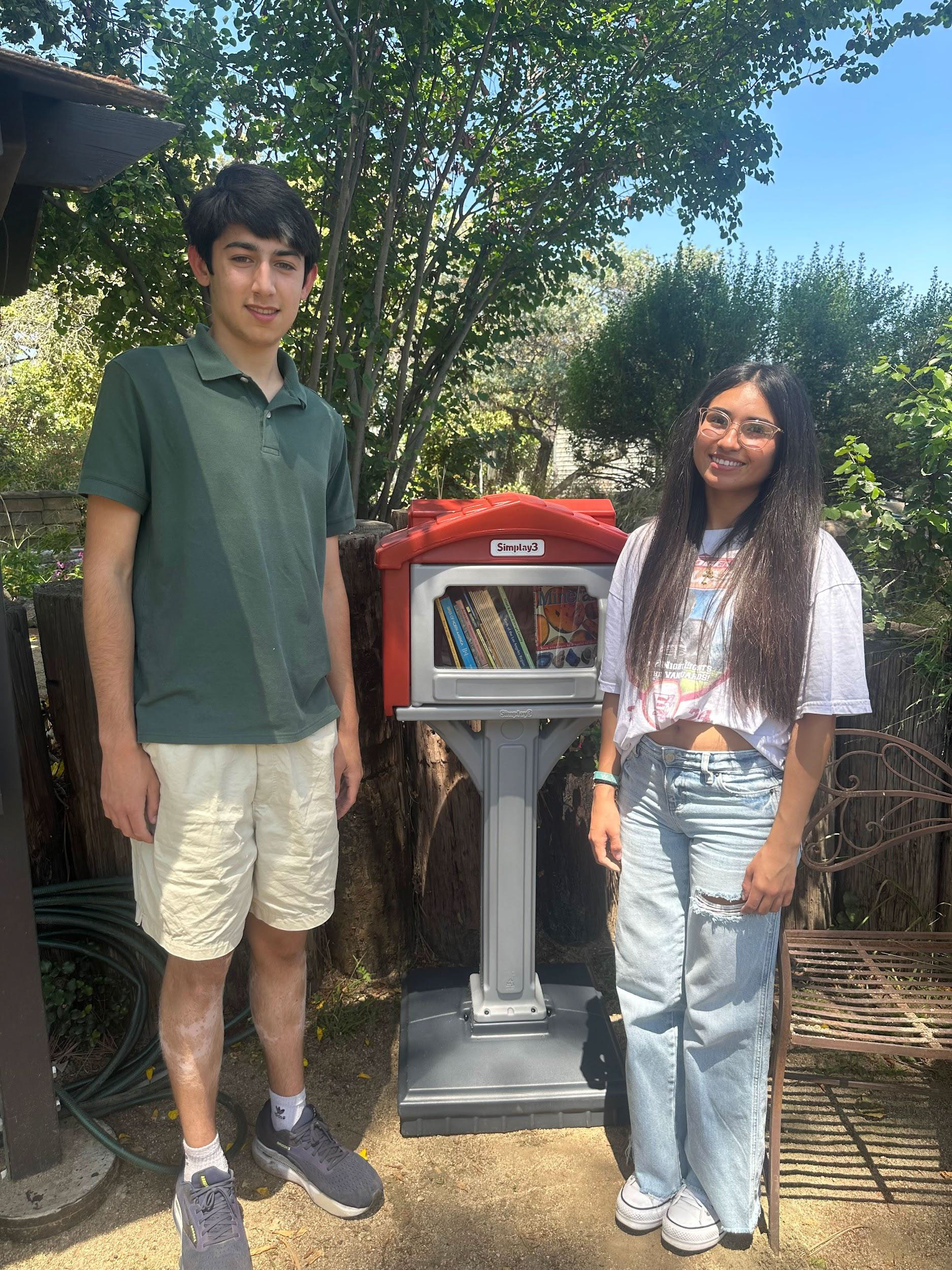
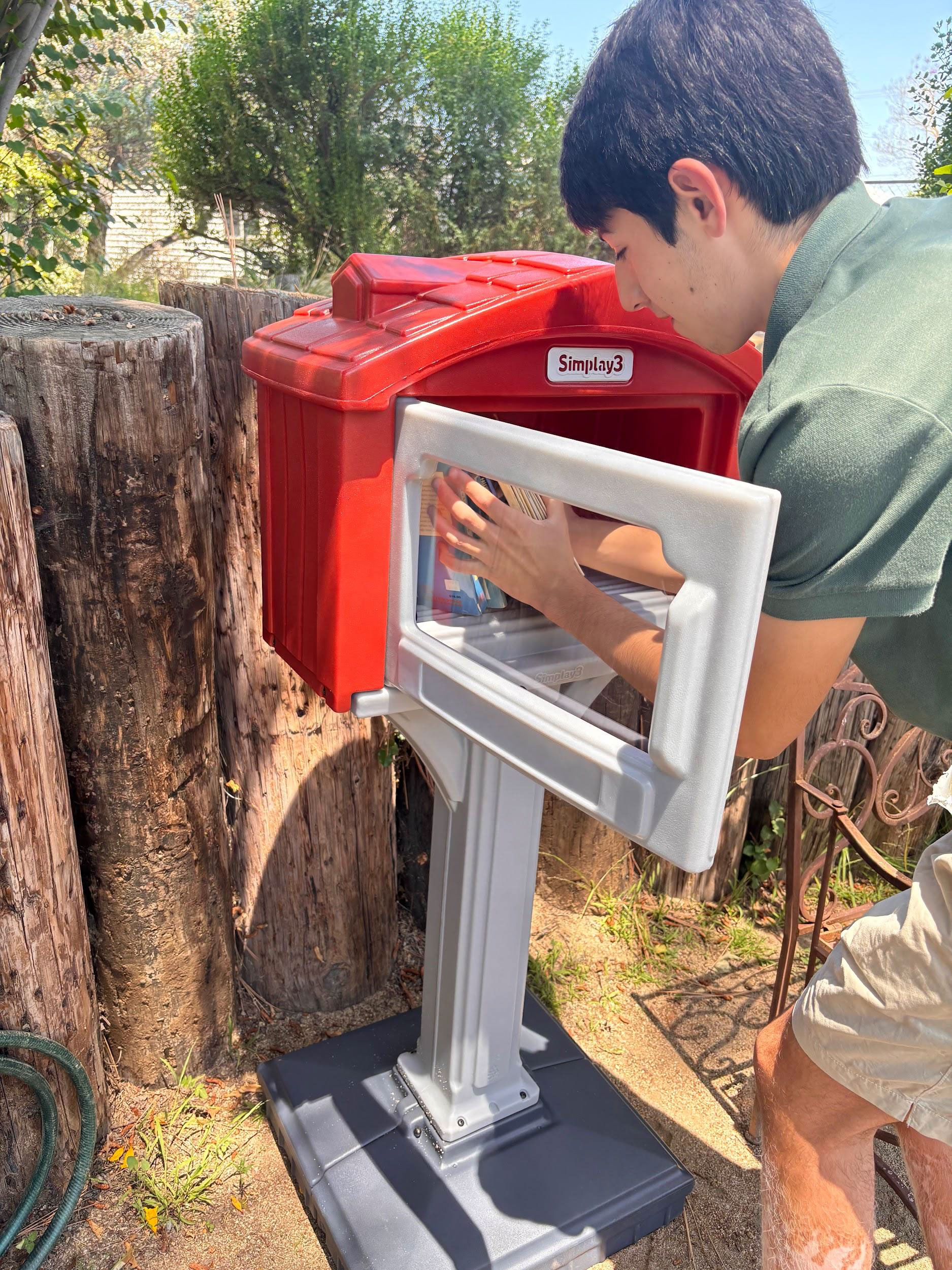
New books were added after the club hosted a week-long book drive for books that allowed students, teachers, and parents to be more involved.
Sprout Club at El Modena High School (Orange, Ca) – Native Plant Restoration Project
The Sprout Club at El Modena dedicated the year to enhancing their campus environment through the planting and care of native plants. With generous funding from the Laguna Ocean Foundation, the students acquired native seeds, a potting bench, and all necessary supplies for growing and maintaining healthy plants. Their work supports local biodiversity, strengthens habitat for native wildlife, and cultivates a culture of sustainability within their school community. The project has laid the groundwork for long-term stewardship and continued collaboration between students and LOF.
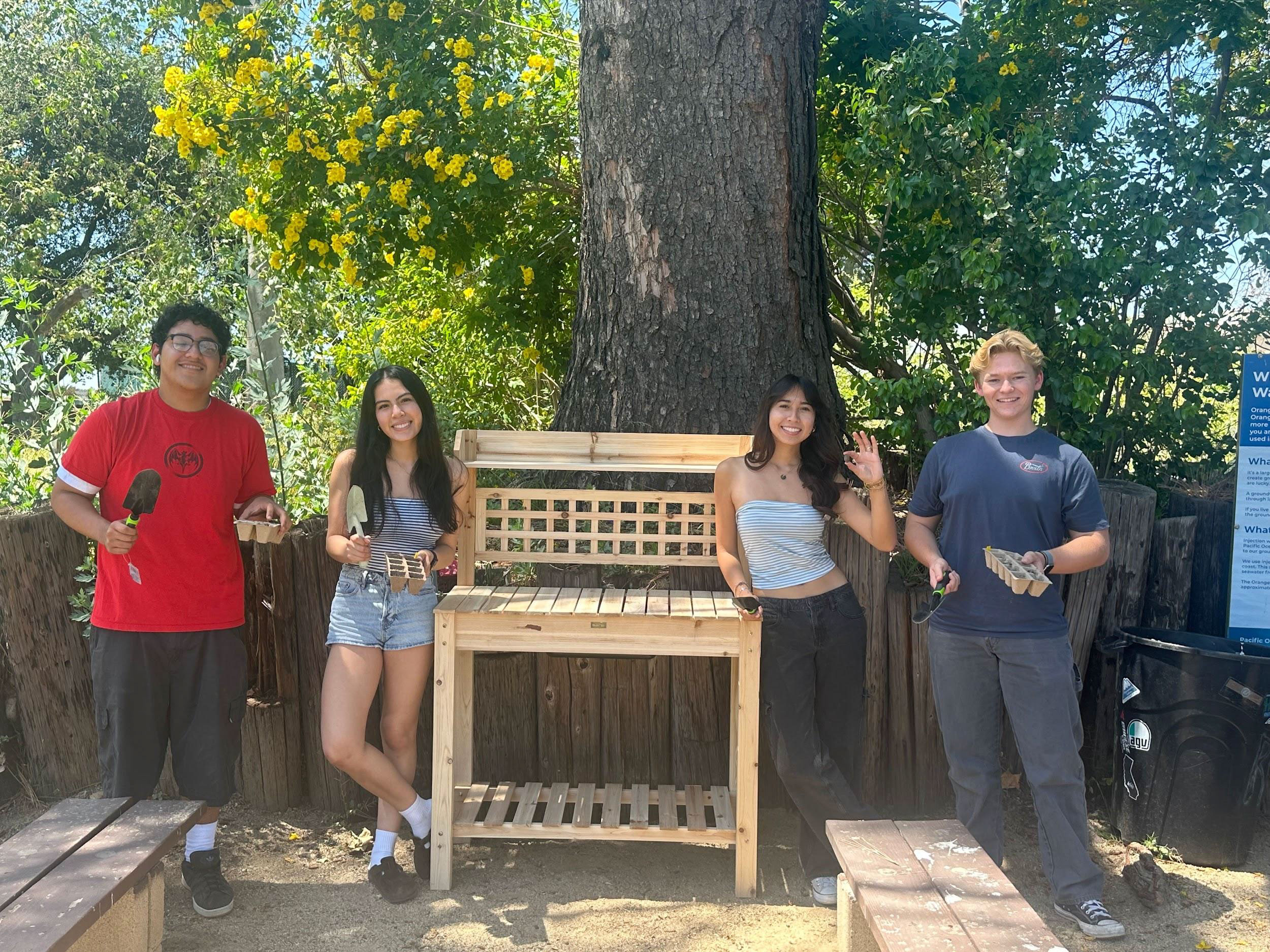
Participating students stand beside a potting bunch that was funded by Emerging Leaders. This enhanced the outdoor learning space as students worked to improve their school and community.
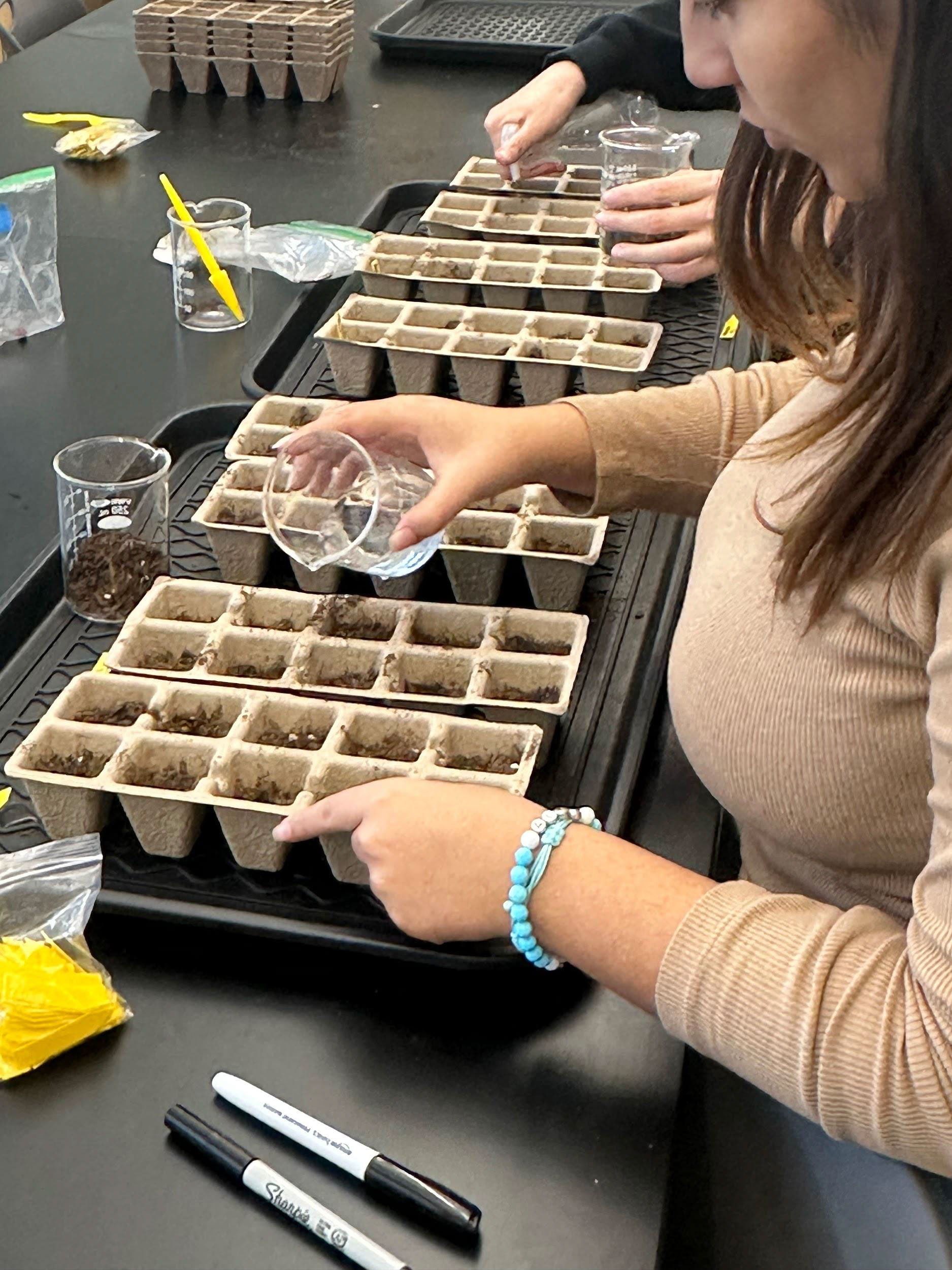
The Sprout Club at El Modena High School grew native plants to promote sustainability and biodiversity on campus.
El Modena High School (Orange, Ca) – Bear Necessities: Upcycled Blanket Initiative
Bear Necessities is a student-led project focused on supporting unhoused individuals while addressing textile waste. Recognizing that roughly 85% of clothing donated to secondhand stores is ultimately discarded, the team developed a creative solution: upcycling old sweaters into warm, durable blankets.
With financial support from the Emerging Leaders Program, they purchased a sewing machine and essential materials—allowing them to increase production quality, involve more volunteers, and expand their impact. The students created blankets by cutting sweatshirt panels into squares, removing pockets with seam rippers, and sewing the pieces into 4×3 layouts. They then attached a soft backing to increase comfort. Four blankets were created and donated to a local organization that helps with housing insecurity (People’s Homeless Task Force Orange County). Future goals include repurposing leftover fabric into headbands and scrunchies, further reducing waste.This project demonstrates the power of youth innovation in addressing both environmental and social challenges.
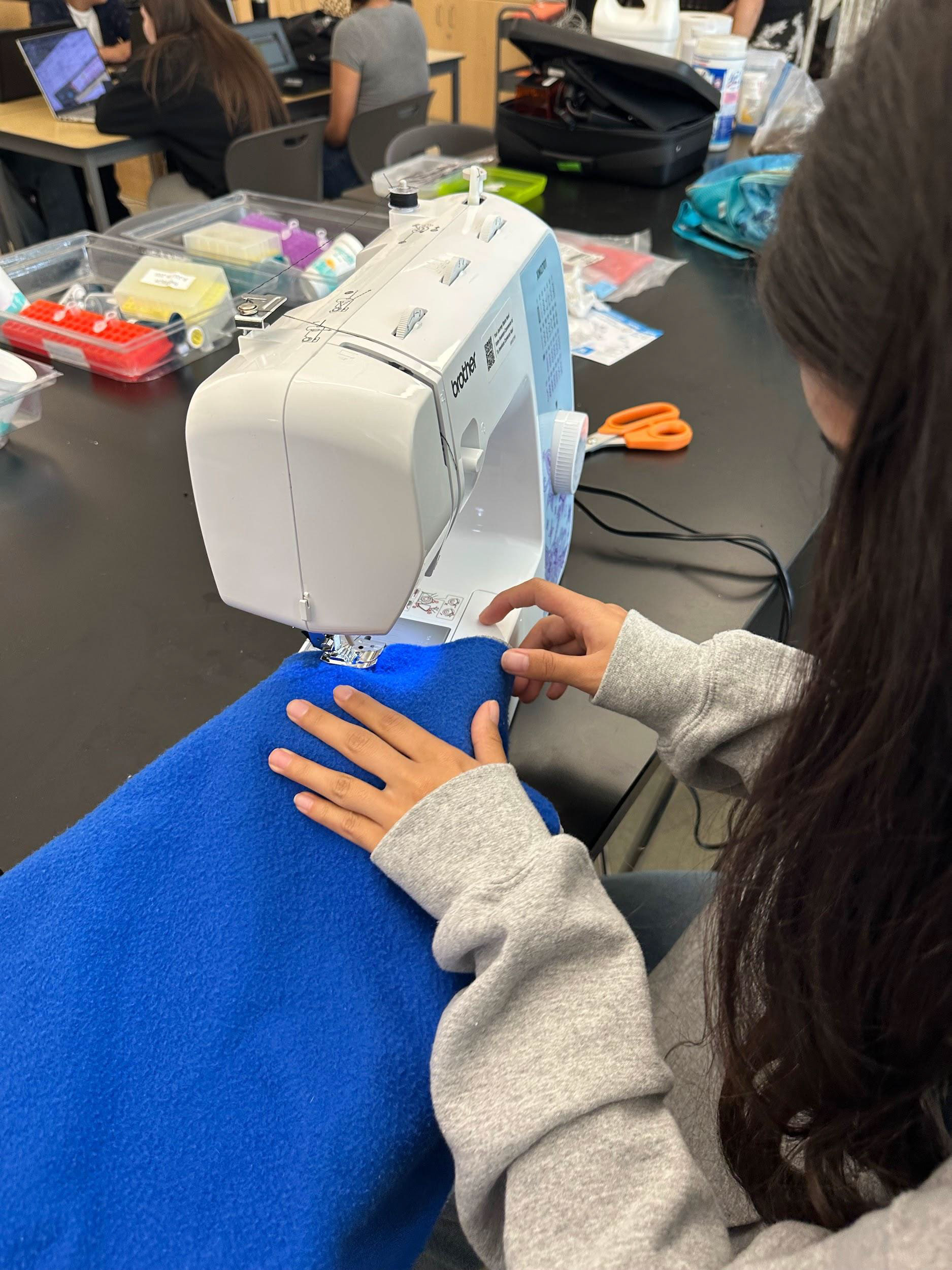
Students created blankets from cut pieces of donated clothing. The finished blankets were donated to help unhoused people in their community.
Current Projects
Aliso Niguel High School (Aliso Viejo, CA) Robotics Club – Submersible ROV for Nearshore Exploration
Coastal communities along Southern California’s shoreline face growing challenges in understanding and monitoring the health of their nearshore marine environments. In places like Laguna Beach, swimmers, student groups, and environmental organizations regularly encounter issues such as murky water, uncertain fish populations, marine debris, and understudied tidal zones. Yet despite the ecological and recreational importance of these coastal habitats, accessible tools to explore and document the underwater environment remain limited.
High-quality Remotely Operated Vehicles (ROVs), commonly used in marine science and industry, are typically too costly and too complex for schools, hobbyists, or community groups to use. This lack of affordable technology leaves residents without the ability to observe changes beneath the surface, collect simple environmental data, or investigate concerns related to water quality, biodiversity, or pollution. As a result, many local environmental issues remain out of sight—and therefore out of reach—for those who want to help.
Traditionally, the only way to gain firsthand visibility underwater has been scuba diving. However, diving is not a practical option for most people. Strong surf, rocky shorelines, and unpredictable visibility create hazardous conditions for divers, and the added requirements of certification, specialized gear, and ongoing maintenance place diving far beyond the reach of most students or community members. These barriers mean that even highly motivated individuals have few opportunities to meaningfully engage with the underwater ecosystems just offshore.
To help bridge this gap, the Emerging Leaders Program is supporting the development of a community-built, student-driven submersible ROV designed to make underwater exploration safe, affordable, and accessible. This project aims to create a small, low-cost, remotely operated vehicle capable of capturing video, collecting basic environmental data, and navigating nearshore waters where diving is impractical.
By empowering students and community groups to design, test, and operate their own ROV, the initiative connects STEM learning with real ecological challenges and gives local residents the tools needed to observe, and ultimately protect, their coastal environment. Once completed, the ROV will support educational outreach, citizen-science monitoring, and collaborative coastal stewardship in Laguna Beach.
El Modena High School (Orange, Ca) Ecological Research Club – Restoration of Pismo Clams through Aquaponics
Coastal ecosystems along California’s shoreline are under increasing strain from pollution, habitat loss, and climate change—pressures that have contributed to declining populations of many native marine species. One such species is the Pismo clam (Tivela stultorum), a once-abundant bivalve with ecological, cultural, and historical significance in California. Overharvesting, shifting ocean conditions, and human disturbance have all played a role in its decline. Despite this, remarkably little scientific research exists on how to raise Pismo clams in captivity or understand their full life cycle. This gap represents both a conservation challenge and an exciting opportunity for student-driven research.
The Emerging Leaders Program is supporting a student-led pilot study aimed at developing the first documented protocols for rearing Pismo clams in a controlled tank environment. Because this work has never been formally recorded, students have the unique opportunity to contribute original scientific knowledge while engaging in authentic, hands-on inquiry. The goal is to generate practical insights and establish clear “do’s and don’ts” that future educators, researchers, or restoration groups can use to guide clam cultivation or conservation efforts.
This project responds to two key needs: the need for a deeper understanding of native marine species conservation and the desire for accessible, meaningful scientific research opportunities for high school students. Many students have limited exposure to real-world experimentation, particularly with living systems where variables are dynamic and outcomes depend on careful observation and adaptive problem-solving. By involving students directly with live organisms, this project bridges the gap between classroom learning and genuine ecological investigation.
Working in teams, students will design and maintain a saltwater tank that replicates natural ocean conditions. They will use tools such as aquarium chillers, circulation pumps, and controlled substrates to maintain proper temperature, salinity, and oxygen levels. Throughout the process, they will meticulously document feeding strategies, water chemistry, growth rates, and behavioral observations. Their findings will help identify which environmental conditions support clam survival and growth—knowledge that does not currently exist in the scientific record.
In addition to developing technical skills, students gain a deeper appreciation for the complexity of marine ecosystems and the importance of protecting native species. Through the daily care of these clams, students experience firsthand how human activity influences coastal environments and why stewardship matters. The data they generate will be shared with local marine education partners and may eventually support restoration projects or inform future aquaculture practices.
Ultimately, this project aims to empower students as emerging researchers capable of contributing to real-world science and conservation. By exploring the biology of a species that has long gone understudied in captivity, students will produce new knowledge while cultivating environmental responsibility and STEM confidence. This blend of hands-on research, ecological awareness, and community engagement makes the Pismo clam project a vital step toward a more informed and conservation-minded future.
Sprout Club at El Modena High School (Orange, Ca) – Native Plant Restoration Project Year 2
Our community is facing growing environmental challenges, including habitat loss, declining biodiversity, and increasing water scarcity. Urban landscaping often relies on non-native plants that provide limited resources for local insects, birds, and wildlife, making it difficult for pollinators and other native species to thrive. At the same time, our changing climate makes water conservation more important than ever. These challenges not only impact local ecosystems but also limit opportunities for students to engage in hands-on environmental learning and stewardship.
In response, students are transforming a portion of their school campus into a native plant garden supported by a rain capture system. They research local plant species, selecting those that attract pollinators and wildlife while enhancing both biodiversity and sustainability. The garden will replace ornamental, non-native vegetation with a thriving, ecologically functional habitat.
To conserve water, students are installing a rain barrel and rain chains on the nature center’s interpretive classroom. Collected rainwater will irrigate the native garden, demonstrating practical sustainable water management and reducing runoff. This hands-on approach allows students to explore the water cycle, understand conservation practices, and see immediate ecological benefits from their efforts.
The project also provides a living laboratory for future classes. Students gain skills in research, data collection, and ecological problem-solving, while observing plant growth, habitat creation, and sustainable design principles in action.
Ultimately, the Native Plant Garden and Rainwater Capture Project addresses both habitat loss and water waste while empowering students to become active environmental stewards. By transforming their campus into a sustainable habitat for native species, students create a lasting impact that inspires their school and the wider community to care for the natural world.